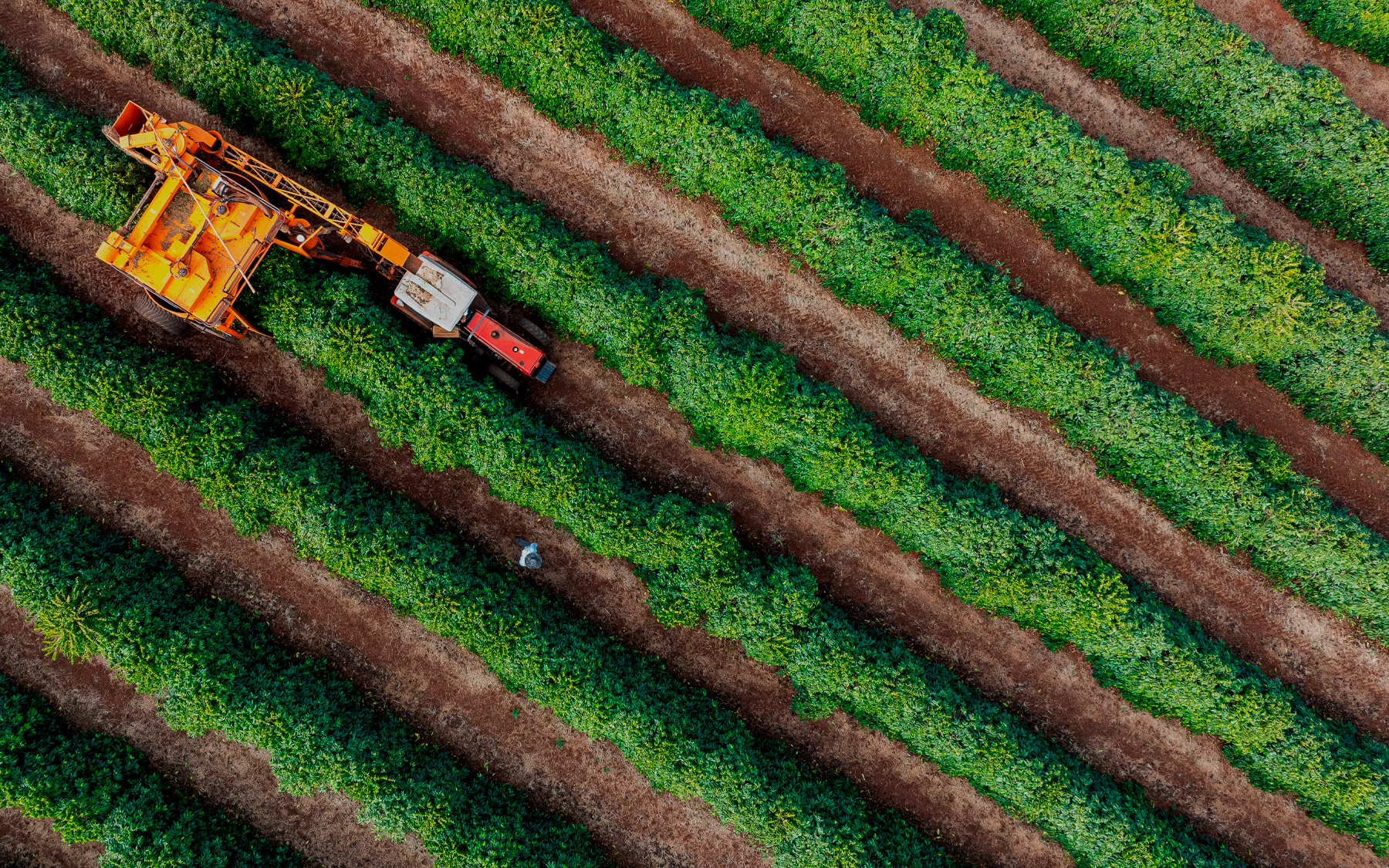
Tractor and harvester in coffee plantation.

Associate in Applied Science, Agriculture

An adaptable degree for the full spectrum of modern agriculture


General Education Requirements Credit Hours
ENG 101, English Composition 1 3
ENG 102, English Composition 2 OR ENGL 102H, Honors English Composition 3
MATH 123, Quantitative Reasoning 4
CHEM 104, Fundamentals of General, Organic, and Biochemistry 4
Social Sciences 3
Humanities or Fine Arts 3


Major Requirements Credit Hours
AGRI 150, Integrated Pest Management 3
AGRI 160, Fruit & Vegetable Production 3
BIOL 120, Plant Biology 4
BIOL 220, Sustainable Systems 3
CHEM 104, Fundamentals of General, Organic, and Biochemistry 4
APHSC 105, Soil Science 4


Students choose two of four specialized pathways to customize their degree: 

  • AgriBusiness Management - Essential business and marketing skills for agricultural operations, including sales, customer service, and management strategies 
  • AgriScience - Soil science, plant biology, and sustainable agricultural practices with a strong scientific foundation 
  • AgTech - Agricultural technology, including computer science, geospatial technologies, and applied trades such as welding and electronics 
  • Wine and Viticulture Foundations - Winemaking, vineyard management, and wine hospitality, including cooperative field experiences
Southwest Michigan is one of the most agriculturally diverse regions in the country, and workforce demand reflects that: 

  • Michigan ranks among the top states nationally for agricultural output, producing more than 300 commodities including fruit, vegetables, grains, dairy, and wine grapes. 
  • The agriculture industry faces significant workforce shortages in skilled technical roles, agribusiness management, and precision agriculture technology. 
  • Wine and viticulture in Southwest Michigan is a growing sector, with Berrien County ranked among the top wine-producing counties in the Midwest. 
  • The U.S. Bureau of Labor Statistics projects steady and growing demand for agricultural workers, managers, and technicians across all key specializations. 
  • National and state reports consistently identify precision agriculture and agri-technology as among the fastest-growing areas of workforce need. 

Modern agriculture is a diverse, technology-driven industry that spans food production, land management, data analysis, business operations, and sustainability. Agricultural professionals work across: 

  • Farm and crop management - overseeing planting, harvesting, soil health, and production systems 
  • Agribusiness operations - managing supply chains, sales, marketing, and customer relationships 
  • Agricultural technology - deploying precision farming tools, GPS and drone systems, and automated equipment 
  • Viticulture and winemaking - cultivating grapevines, managing vineyards, and producing wine for Michigan's thriving wine industry 
  • Agricultural education and consulting - advising farmers, businesses, and organizations on best practices and innovation 

How to Apply

Ready to get started?

Connect with us! Request more information or apply today, and we'll send you everything you need to begin your journey at LMC.

Back to Top