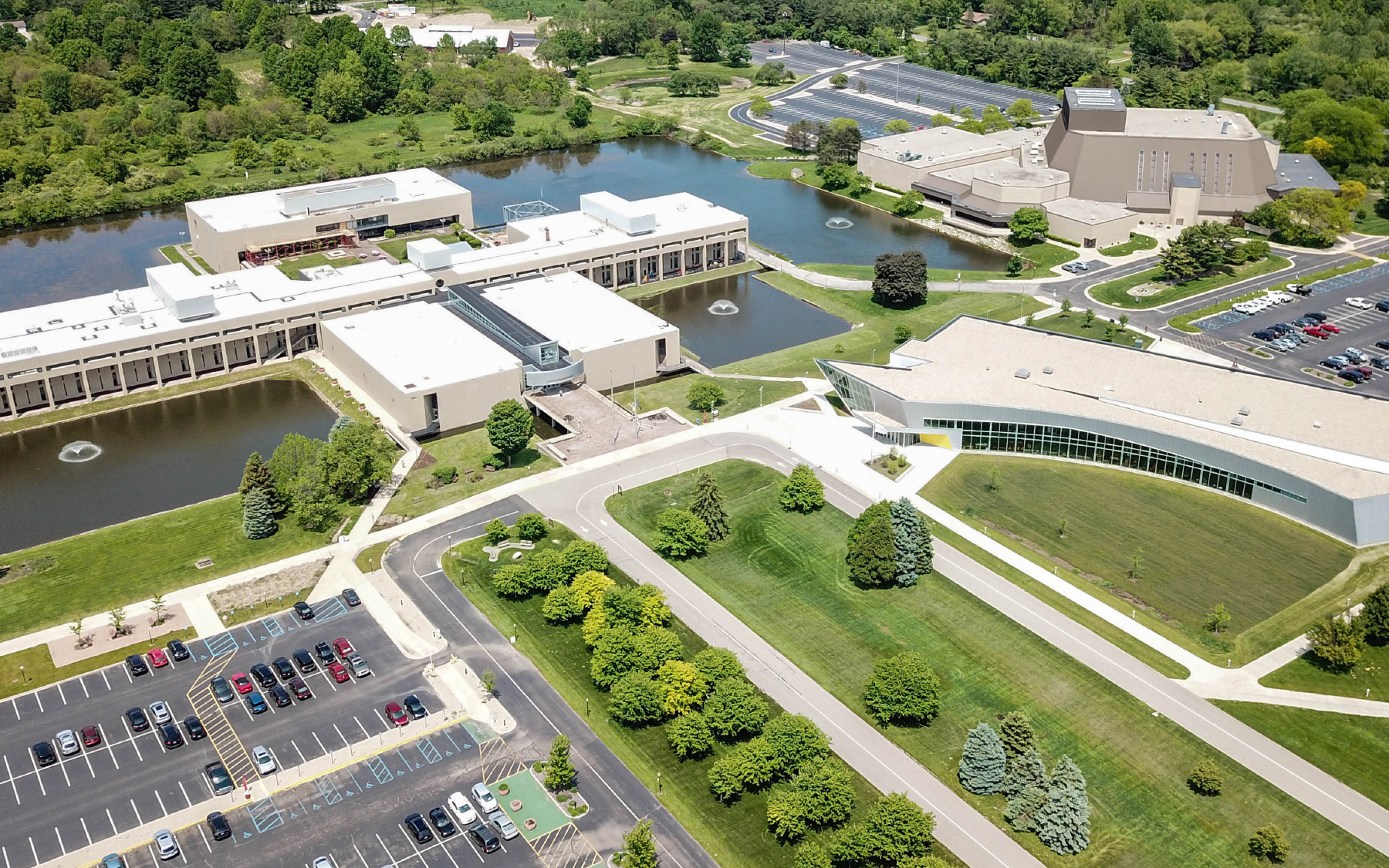
Drone photo of the front entrance of the Benton Harbor campus.

Student Well-Being & Accessibility

Student Well-Being & Accessibility provides mental health counseling, basic needs support, and disability support services to students at Lake Michigan College.

Location
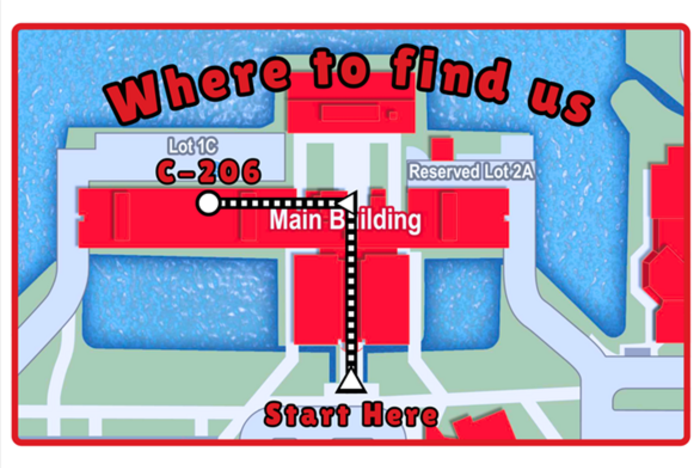
Benton Harbor Campus, Main Building, C-206 

Contact
dss@lakemichigancollege.edu
(269) 927-8142

At Lake Michigan College, we’re committed to making sure every student has what they need to succeed. Student Well-Being & Accessibility provides accommodations and resources to ensure students with disabilities have equal access to classes, campus life, and every part of the LMC experience. Our goal is to support your success and help remove barriers along the way.


Student Well-Being & Accessibility works with students and the campus community to create an inclusive and supportive college experience. Our office:

  • Collaborates with students to determine eligibility for accommodations.
  • Partners with community agencies, schools, and LMC faculty/staff to support students as they transition to and progress through college.
  • Offers workshops and trainings on disability-related topics for students, faculty, staff, and community members.
  • Helps shape inclusive policies, procedures, and practices across the college.
  • Supports Career and Technical Education (CTE) students through cost assistance, resources, and referrals under the Federal Perkins Grant.

Step 1: Connect with Us

Contact Student Well-Being & Accessibility to request an intake appointment. You can email us at dss@lakemichigancollege.edu, call (269) 927-8142, or complete this form.

Step 2: Meet with a Disability Resource Professional

During your intake appointment, you’ll meet one-on-one with a Disability Resource Professional to talk about your needs and goals. This is a supportive, interactive conversation where we’ll also review any documentation you may have (like a 504 Plan, IEP, or medical/mental health records). Don’t worry if you don’t have copies—we can help you request the information.

Step 3: Create Your Accommodation Plan

Together, you and your Disability Resource Professional will create a personalized Accommodation Plan that outlines the accommodations you’re eligible for (such as testing accommodations, note-taking support, or accessible course materials).

Step 4: Share with Your Instructors

You must share your official Accommodation Plan with each of your instructors for every class each semester so they know how to best support you.

Getting Started with Documentation

Documentation helps us understand your needs and create the right Accommodation Plan. Examples include an IEP/504 Plan, medical or mental health records, or your own statement about how your disability affects your learning. If you don’t have paperwork, don’t worry, your Disability Resource Professional will help. Federal guidelines say documentation should be flexible and not burdensome, so our goal is to remove barriers, not create them.

Documentation for a Disability

  1. High School Records: IEP, 504 Plan, or evaluation reports (these may give us helpful background, but we understand that high school and college are different).
  2. Medical Documentation: A letter or report from a licensed healthcare provider describing your condition and its impact.
  3. Mental Health Documentation: A letter or records from a licensed counselor, psychologist, or psychiatrist.
  4. Student Self-Report: Your own description of how your disability impacts learning and access — this is always an important part of the process.
  5. Release of Information: If documentation isn’t available, you can sign a release form so we can request it directly.

What If I Don't Have Documentation?

Don’t worry if you don’t have records or reports. Your Disability Resource Professional will work with you to figure out next steps, which may include requesting documentation from your previous school, medical provider, or other sources. Your experience and self-report are always part of the conversation, so we can still help create an Accommodation Plan that meets your needs.

Remember: you don’t need to “prove” your disability all over again. Documentation is just one piece of the process, your lived experience is just as important.

To use Testing Services:

Step 1: Send your Accommodation Plan

Email a copy of your Accommodation Plan to Testing Services at testingservices@lakemichigancollege.edu so they have it on file.

Step 2: Schedule your exams

Be proactive in scheduling your exams through the Testing Services website (choose the option for LMC instructors).

Step 3: Coordinate with your faculty

Work directly with your instructors to confirm the date and time when your exams should be completed.

Legal Information & ADA / Title II Contact

Lake Michigan College is committed to providing equal access and opportunities for all students, in compliance with:

  • The Americans with Disabilities Act (ADA), as amended by the ADA Amendments Act (2008)
  • Section 504 of the Rehabilitation Act of 1973
  • Other applicable federal and state laws that prohibit discrimination based on disability

ADA / Title II Coordinator Contact

If you have questions or concerns regarding ADA compliance or need to discuss accessibility issues on campus, you may contact:

Doug Schaffer
Vice President of Advancement & Community Impact / ADA Coordinator
Email: dschaffer@lakemichigancollege.edu
Phone: (269) 927-8120

Service Animals and Emotional Support Animals

Lake Michigan College is committed to providing equitable access for students who use animals for disability-related support. There are two different categories of animals you may see on campus:

Service Animals

Service animals are dogs (and in some cases miniature horses) that are individually trained to perform specific tasks directly related to a person’s disability (for example: guiding someone who is blind, alerting someone who is deaf, pulling a wheelchair, or recognizing a seizure). Under the Americans with Disabilities Act (ADA), service animals are allowed to accompany their handler in all areas of campus where the public is normally allowed. Students are not required to register their service animal with Student Well-Being & Accessibility, but doing so can help us provide additional support if needed.

Emotional Support Animals (ESAs)

Emotional Support Animals provide comfort and support that can ease the impact of a disability. ESAs are different from service animals because they are not trained to perform specific tasks. At LMC, ESAs are generally only approved to live with you in campus housing and are not permitted in classrooms or other campus spaces.

If you believe an Emotional Support Animal (ESA) would support your well-being and access to housing, follow these steps:

Step 1:Connect with Student Well-Being & Accessibility (SWBA).
Schedule an appointment with SWBA to discuss your housing needs and begin the accommodation process.

Step 2: Gather documentation from a licensed healthcare provider.
Your provider (e.g., physician, nurse practitioner, psychiatrist, psychologist, counselor) should write a letter that:

  • Is on professional letterhead and includes their contact and licensing information.
  • States that you have a disability that substantially limits one or more major life activities.
  • Explains the relationship between your disability and the need for the ESA.
  • Describes why the animal is necessary for you to fully use and enjoy your housing.

Step 3: Submit your accommodation request.

Provide the documentation to SWBA, who will review your request and coordinate with Housing.

Step 4: Await review and approval.

SWBA will notify you if any additional information is needed. Once approved, Housing will provide guidance on next steps for bringing your ESA into campus housing.

Step 5: Owner responsibilities.

While ESAs do not require training, they must be well-behaved, safely housed, and under your control at all times.

Important Notes:

  • An ESA is not a pet—it is an approved accommodation for a disability.
  • Requests should be made as early as possible.
  • If your ESA is an uncommon animal (not a dog, cat, rabbit, bird, or other small domesticated pet), additional documentation may be required.

Am I automatically eligible for services at Lake Michigan College if I received services in high school or at another school?

Not automatically. Disability services in college are governed by different laws than in high school. Even if you received accommodations elsewhere, you must disclose your disability and provide documentation to Student Well-Being & Accessibility at LMC. Your eligibility and accommodations will then be determined based on your current courses and needs.

I think I might have a learning disability, but I’ve never been tested. Can Student Well-Being & Accessibility help?

Yes! If you suspect you may have a learning-related disability, Student Well-Being & Accessibility is here to support you. Documentation is just one piece of the process, and we understand that not everyone has been formally tested. We can meet with you to talk through your experiences, provide guidance, and connect you with trusted resources to support your success.

If I’m approved for accommodations, will they stay the same the whole time I’m at LMC?

Not necessarily. Accommodations are tailored to how your disability impacts your specific courses and learning environment. They are reviewed and can be adjusted as your needs or course requirements change. While students are welcome to meet with Student Well-Being & Accessibility each year to review accommodations, an annual meeting is not required; accommodations are flexible and responsive to your current needs.

Does Student Well-Being & Accessibility provide tutoring?

Student Well-Being & Accessibility does not directly provide tutoring. However, free support is available on campus, including tutoring, writing assistance, math help, and guidance with study strategies.

How much information do I need to share with my instructors about my disability?

Your privacy is important. Student Well-Being & Accessibility is your main point of contact for all disability related information. If you’re approved for classroom accommodations, you’ll receive an accommodation plan to share with your instructors. This plan outlines your approved accommodations but does not disclose your diagnosis. You may choose to share additional details if you wish, but you are never required to do so.

Can Student Well-Being & Accessibility help if I have a temporary condition, like a broken leg?

Yes. Even for temporary conditions, you may qualify for accommodations (such as accessible furniture).

Informal complaint

Student Well-Being & Accessibility is committed to providing fair, consistent, and supportive services to all students. If you disagree with a decision made by a Disability Resource Professional regarding your accommodations or services, you have the right to file a complaint or appeal the decision.

Step 1: Try to Resolve the Issue Informally

Whenever possible, start by discussing your concerns directly with the Disability Resource Professional who made the decision. Many issues can be resolved through open conversation. You can:

  • Ask for clarification about the decision.
  • Share additional information or documentation that may not have been considered.

Step 2: Speak with the Associate Dean of Student Success & Support Services

The Associate Dean will investigate the grievance and reply with an answer to the grievance. If the student is unsatisfied with the response, they may then initiate a formal complaint.

Formal complaint

Step 1: Submit a Formal Complaint or Appeal

If the issue cannot be resolved informally, you may submit a written complaint or appeal. A written grievance must be submitted within 5 business days of receipt of the answer to the informal complaint. Your submission should include:

  • Your name and student ID number.
  • A clear description of the decision you are appealing.
  • The reasons you believe the decision should be reconsidered.
  • Any supporting documentation or information relevant to your request.
  • Submit your written appeal to the Associate Dean of Student Success & Support Services. Email: lnavarro@lakemichigancollege.edu. Phone: (269) 927-8866.
  • The Associate Dean will investigate the grievance and reply in writing to the student within 5 business days.

Step 2: Appeal to the President

If not satisfied, submit a signed appeal to the College President within 5 business days of the Associate Dean's response. The President will meet with the involved parties and respond in writing within 10 business days.

Step 3: Appeal to the Board of Trustees

Submit a signed appeal to the Board within 5 business days of the President’s response. The Board meets with all parties within 30 business days and sends a written decision within 10 days of the meeting.

Step 4: External Appeal

If unresolved, the grievance can be filed with the Office for Civil Rights, U.S. Department of Education.


Location
Benton Harbor Campus, Main Building, C-206

Contact
(269) 927-8142
counseling@lakemichigancollege.edu

Hours
M-F; 8-5pm
Virtual sessions available by request

You’re Not Alone, Let’s Talk.

College life comes with challenges, and at times it can feel overwhelming or isolating. LMC counselors are here to support you through everyday stress as well as more serious concerns that can affect your academics, relationships, and overall well-being. Everyone has ups and downs, and reaching out for support is a strong and positive step.

Student Well-Being & Accessibility (SWBA) offers free, confidential mental health support to currently enrolled students.


Student Well-Being & Accessibility Services

All services are free and confidential for currently enrolled students.

Individual Counseling

One-on-one sessions focused on your goals and well-being. Counseling focuses on emotional well-being, stress, and mental health concerns.

  • Available in person in the Main Building, Suite C206
  • Available virtually from your phone or laptop using a HIPAA-compliant platform

Counseling is a supportive, collaborative space where:

  • You decide what and how much to share
  • You are met with respect, not judgment
  • Conversations focus on your goals and concerns
  • Your privacy is protected
  • Support is tailored to your needs

Crisis Support

During Business Hours

Same-day or urgent care appointments are available during office hours by calling SWBA and/or walking into the office suite.

After-Hours Crisis Support

If you are experiencing mental health concerns outside of regular business hours, please contact TimelyCare, which provides 24/7 telephone crisis support by calling 269-927-2828.

TimelyCare also offers additional after-hours support for LMC students, including scheduled virtual counseling services and immediate, short-term, solution-focused virtual care.

To connect with TimelyCare, visit timelycare.com/lakemichigancollege or select the TimelyCare tab for more information.
(Insert TimelyCare link tab from current SWBA website)

Basic Needs Support

Basic Needs Support helps students connect with campus and community resources for food, housing, transportation, and other practical needs.

Appointments can be one-time or ongoing (depending on what you need) and are focused on identifying solutions so you can stay focused on your education.

Workshops & Skill-Building Sessions

Must be scheduled in advance. Short, practical sessions focused on:

  • Stress management
  • Test anxiety
  • Coping skills/healthy habits
  • Communication and relationships
  • Mental health and wellness
  • Preventing student crises
  • Performance enhancement coaching (“The Mental Game”) for athletic teams

If you would like to schedule a presentation, please reach out to counseling@lakemichigancollege.edu for further discussion.

Welcome to Our Space

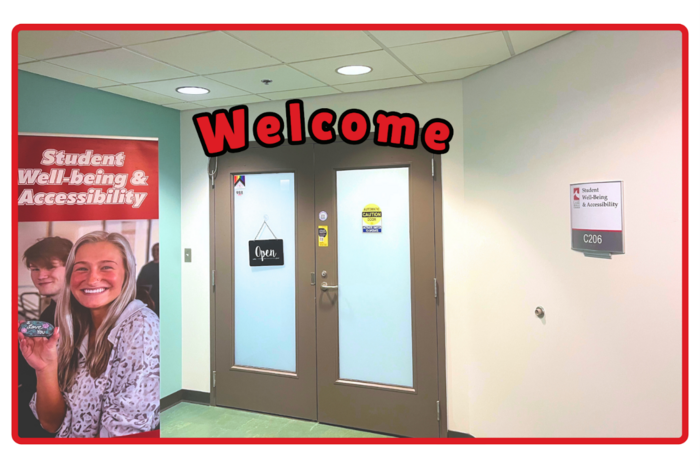
Front Entrance to the SWBA suite: Welcome!
Student Well-being & Accessibility - picture 1

Location: SWBA is located on the second floor in the C Wing, where the orange square is located on the LMC Main Campus Map.

Student Well-being & Accessibility - picture 2

How to Get Started

Getting support is simple:

  1. Complete the New Student Counseling Form (link from old website) or email counseling@lakemichigancollege.edu
  2. The SWBA team will reach out to schedule your first appointment
  3. Attend your first session, either in person or virtually

Not sure if counseling is right for you yet? You’re welcome to reach out, ask questions, or start with a brief check-in.

What is Counseling?

Counseling (also called therapy) is a supportive process where students meet with a licensed mental health professional to talk through challenges, build coping skills, and work toward personal goals.

You do not need to have a mental health diagnosis to come to counseling.

Students seek counseling for many reasons, including:

  • Academic stress or test anxiety
  • Feeling sad, overwhelmed, or stuck
  • Relationship or family concerns
  • Life transitions
  • Personal growth and self-care

Our Approach to Counseling

Counseling services at Lake Michigan College are designed to support students’ mental health and overall well-being while they are enrolled. To help set clear expectations, the following information outlines the scope and limits of counseling services.

Model of Care

You do not need to be in crisis to come to counseling. Many students come simply to talk, check in, or learn skills to manage stress.

Counselors work collaboratively with students to identify goals and determine the most appropriate level of support. When longer-term or specialized care is needed, counselors can assist with referrals to community providers.

Session Frequency and Limits

  • Counseling sessions are typically 45 minutes in length.
  • The number of sessions a student may receive varies based on individual needs, goals, and counselor availability.
  • If a student would benefit from ongoing or specialized care beyond the scope of campus counseling, referral options will be discussed.

Psychiatric and Medication Services

LMC counselors are licensed mental health professionals; however, SWBA does not prescribe medication.

  • If medication or psychiatric services are recommended, counselors can help students explore available options and support self-advocacy when seeking care.
  • Referrals to community psychiatric providers may be provided as appropriate.

Referrals and Continued Support

If a student’s needs go beyond the scope of campus counseling services:

  • Counselors collaborate with students to identify appropriate community resources.
  • Support is provided to help navigate referrals and next steps.
  • When appropriate, students may continue to receive short-term on-campus support while transitioning to off-campus care.

Specialized services available off campus:

  • Long-term or intensive psychotherapy
  • Court-ordered evaluations or treatment
  • Forensic, legal, or custody evaluations
  • Medication prescriptions or medication management
  • Documentation for legal proceedings

Counselors are available to help students explore options and connect with off-campus resources when needed.

Accessibility & Inclusion

SWBA is committed to providing culturally responsive, inclusive, and accessible care. We strive to create a welcoming environment for students of all identities and backgrounds, including:

  • BIPOC students
  • LGBTQIA+ students
  • Students with disabilities
  • First-generation students
  • Adult learners
  • International students
  • Neurodivergent students
  • Veteran/military connected students

Services are offered in accessible spaces and virtually when appropriate. Students may request accommodations as needed.

Confidentiality & Privacy

Counseling services are confidential and separate from academic records.

  • Information shared in counseling is not shared with faculty, staff, parents, or family members.
  • Counselors do not initiate contact with others about your care.
  • Exceptions to confidentiality apply only if there is imminent risk to your safety or the safety of others.
  • Seeking counseling does not affect your academic standing, financial aid, immigration status, or disciplinary record.

Cost & Eligibility

Is There a Cost?

No. Counseling services are free for enrolled students.

Who Is Eligible?

All enrolled LMC students age 18+ are eligible for SWBA counseling.

For students under 18, SWBA counselors can help you connect with counselors in the community, or you can access virtual counseling via our partnership with TimelyCare.

To connect with TimelyCare, visit timelycare.com/lakemichigancollege or select the TimelyCare tab for more information.
(Insert TimelyCare link tab from current SWBA website)

Office Hours & After-Hours Support

Office Hours: Monday–Friday, 8:00 a.m.–5:00 p.m.

SWBA will not be open if LMC is closed for holidays.

After-Hours Crisis Support (24/7)

If support is needed outside of office hours:

  • TimelyCare Crisis Now: 269-927-2828
  • 988 Suicide & Crisis Lifeline: Call or text 988

If you are in immediate danger, call 911.

TimelyCare also offers additional after-hours support for LMC students, including scheduled virtual counseling services and immediate, short-term, solution-focused virtual care.

To connect with TimelyCare, visit timelycare.com/lakemichigancollege or select the TimelyCare tab for more information.
(Insert TimelyCare link tab from current SWBA website)

Supporting a Student in Crisis

What is a mental health crisis?

A mental health crisis is a situation in which a person's actions, feelings, and behavior puts them at risk of hurting themselves or others, or otherwise cannot be safely managed on their own or with loved ones, and requires support from trained professionals.

Student Well-Being & Accessibility is equipped to manage student mental health crises when a student needs support with coping skills. However, if there is an immediate safety issue, please call 911 or 6911 (campus security).

A student may be experiencing a mental health crisis and should be connected to mental health services right away if they:

  • Express despair or hopelessness, like there is no reason to live
  • Express or post on social media that they’re thinking about or planning to harm themselves
  • Mention engaging in self harm or show signs of self-injury
  • Are experiencing a distortion of reality (seeing/hearing things that others cannot)
  • Experience symptoms of a panic attack, such as difficulty breathing, rapid heart beat, nausea, intense fear or discomfort, and trembling/shaking
  • Excessive withdraw from loved ones

Call 911 or 6911 (campus security) if the student is:

  • Actively harming themselves
  • Threatening violence toward others

What can I do?

Try to remain calm. Listen to the individual nonjudgmentally, and hear their concerns. Acknowledge their feelings, and let them know you want to help.

During business hours, refer the student to the LMC Office of Student Well-Being & Accessibility, or offer to walk them to Suite C206.

If the mental health crisis occurs outside of open hours for the LMC Office of Student Well-Being & Accessibility (M–F; 8:00 a.m.–5:00 p.m.):

  • Have the student call TimelyCare’s Crisis line at 269-927-2828 (or call together); or
  • Have the student call or text 988 (Suicide & Crisis Lifeline) (or call/text together).

Both services are available 24/7 and will connect with a trained crisis counselor who will work to de-escalate the situation and refer students to appropriate resources.

If you or the student are in immediate danger, dial 911 or 6911 (campus emergency services).


Frequently Asked Questions (FAQ)

While friends and family are an important part of support, counselors offer something different:

  • Professional training in mental health care
  • Legal and ethical confidentiality standards
  • An objective, outside perspective
  • Dedicated time focused entirely on you

No. Many students come to counseling simply to check in, talk things through, or build healthier routines.

Students are welcome to request a specific counselor when available. Our team will do their best to accommodate preferences.

Most students haven’t. Counselors will walk you through the process and help you feel comfortable every step of the way.

Your first appointment (often called an intake) lasts about one hour. You’ll meet with a counselor to:

  • Talk about what brings you to counseling
  • Share important background information
  • Identify goals for counseling
  • Discuss next steps and scheduling

Ongoing appointments are typically 45 minutes long, with a schedule determined collaboratively between you and your counselor.

It’s best to refer a student to the LMC Office of Student Well-Being & Accessibility (SWBA) if your concern is beyond your level of training and experience.

A student should always be connected with SWBA if they are experiencing:

  • Suicidal thoughts or behaviors
  • Severe or persistent depression
  • Substance misuse or abuse (drugs or alcohol)
  • Self-injury behaviors (e.g., cutting, burning)
  • Physical or emotional trauma
  • Sexual assault (current or recent)
  • Eating disorder behaviors or concerns
  • Panic attacks or acute anxiety episodes
  • Sudden or significant changes in behavior (including appetite, sleep, or mood)
  • Difficulty caring for themselves or meeting basic daily needs
  • Severely distorted thoughts (e.g., hearing or seeing things that are not present)

Other times, you will have to use your judgement to determine if connecting a student to counseling is the right call. Some signs students may need support include:

  • Missing assignments
  • Repeated absences
  • A decline in academic performance
  • Alarming content in assignments
  • Excessive fatigue
  • Seeming sad, withdrawn, or numb

A Care & Concern Report is on the LMC incident reporting forms page:

https://www.lakemichigancollege.edu/students/incident-reporting

Please click on the Care and Concern report:

https://cm.maxient.com/reportingform.php?LakeMichiganCollege&layout_id=1

This form allows faculty, staff, students, or community members to share concerns about a student’s well-being so LMC can connect them with appropriate support. By submitting a report, you are helping us maintain a healthy and safe campus community.

Reports are reviewed during normal business hours by the Care and Concern team. Please address urgent safety issues by connecting to 6911 or 911.

Yes. Students may access counseling alongside disability services and basic needs support.

Yes. Counselors can assist with referrals to community providers and also discuss TimelyCare as an option.

No. LMC counselors have a legal and professional obligation to keep students’ identities and concerns confidential.

We are thankful for faculty & family members who connect students to counseling services, but we cannot follow up to confirm if a student is receiving services, or what they talk about in counseling sessions.

Counseling services are available to all enrolled LMC students, including those taking only online classes or attending the South Haven, Bertrand Innovation Center, or Allegan Tech Center campuses.

Students may choose virtual counseling or in-person appointments at the Main Campus, based on availability.

SWBA has two licensed counselors that offer counseling services to students.

However, SWBA sometimes has graduate-level interns who are in graduate degree seeking programs and can provide counseling under the supervision of a licensed clinician. They can support common concerns such as stress, anxiety, and adjustment to college life just the same as other counselors in SWBA.

You will be informed if your counselor is an intern and may request a licensed counselor instead.

TimelyCare Virtual Mental Health Services

Lake Michigan College has partnered with Timelycare, a virtual mental health provider, to offer free, confidential mental health support and 24-7 crisis support to all enrolled students, including those under 18.

In addition to the free and confidential mental health counseling offered in person and virtually through Student Well-Being & Accessibility, all LMC students can also access mental health and 24/7 crisis support via TimelyCare.

100% free and no insurance needed for LMC students.


Available Services Through TimelyCare

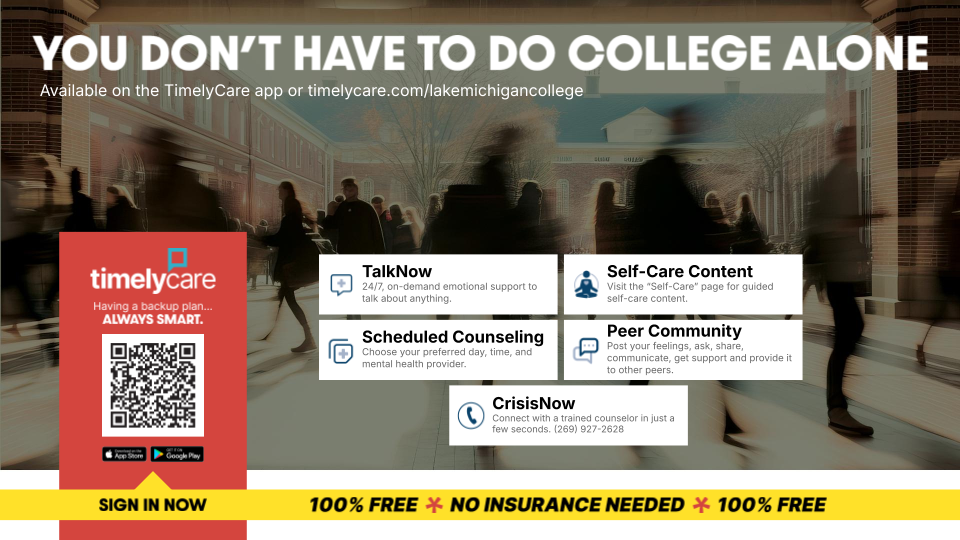
Crisis Now: 24/7 crisis phone support with real humans who get it. Connect immediately by phone with a licensed counselor. 269-927-2828.
Scheduled one-on-one Virtual Mental Health Counseling: Pick a time, pick a counselor, and you’re set for your virtual counseling session. Six sessions available per academic year.
Talk Now: Stressed and need support ASAP? Get a quick 20-minute (or less) check in with a counselor, available anytime, on demand.   
Self-Care Content: Access calming meditations, simple yoga flows, and quick tips whenever life gets loud.
Peer Community: Post, ask for support, and connect with a community of students who truly get you.


Visit timelycare.com/lakemichigancollege or download the TimelyCare app, then sign in with your LMC email address.

 

Timelycare ad image

Counselor

Please call me Rhi.

Read more
Counselor

Hi, I’m Rachel. I’m a licensed social worker with a Master’s in Social Work from Western Michigan University.

Read more
Administrative Assistant, Student Well-Being and Accessibility

I am a community-driven creative who leads with empathy, curiosity, and a commitment to making others feel seen, heard, an

Read more
Associate Dean, Student Success & Well-Being

Leslie Navarro is a visionary higher education leader dedicated to advancing student success, wellness, and belonging at L

Read more
Back to Top